

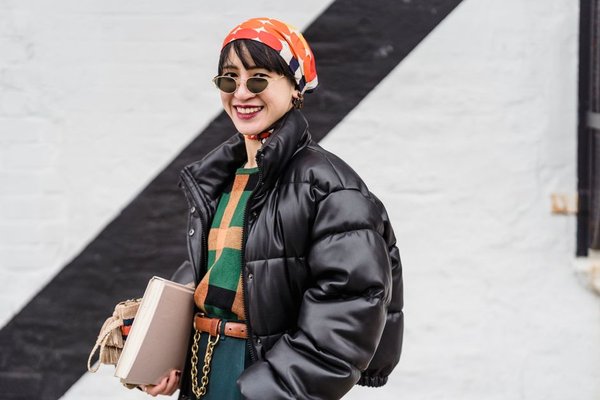
A scarf used to be the last thing added before leaving the house: practical in winter, decorative in warmer months. In 2026, it is doing far more of the styling work. Scarves are being worn as head coverings, belts, soft collars, hair ties and light layers over tailoring. One small piece can change the proportions, colour balance and mood of an outfit without requiring a new wardrobe.
The strongest scarf trends 2026 has produced are not about complicated knots or expensive labels. They are about treating the scarf as part of the outfit rather than an afterthought. Silk squares remain important, long skinny scarves have returned, vintage-inspired prints feel fresh again, and oversized winter versions are becoming more sculptural. The key is choosing the right scale, fabric and placement.
The silk scarf becomes the centre of the outfit
Silk and silk-look scarves are among the most visible trending scarves 2026 has brought into everyday dressing. Instead of being tucked beneath a coat, they are being displayed over shirts, blazers and dresses. Large squares create a fluid panel across the chest or shoulder, while smaller neckerchiefs add a sharp flash of colour near the face.
For a polished look, fold a square scarf diagonally into a triangle, place the point at the front and tie the ends loosely behind the neck. Keep the rest of the outfit simple: a white shirt, straight trousers and loafers are enough. If a print feels overwhelming, fold it into a narrow band so only part of the pattern remains visible.
The headscarf returns in a cleaner form
Headscarves are no longer limited to holiday dressing. In 2026, they appear with denim, tailored coats, simple dresses and matching separates. The most modern versions are tied with less volume. A smooth triangle over the hair creates a sleek finish, while a looser tie beneath a low bun feels relaxed.
Fabric changes the effect. Silk looks refined, cotton feels casual, and lightweight wool works in colder weather without becoming bulky. For a secure fit, use a scarf with a slightly textured surface or place a narrow fabric headband underneath. This is one of the most useful scarf tying tips for anyone who finds silk sliding backwards.
Long skinny scarves add a vertical line
The long, narrow scarf has returned with an early-2000s mood, but the 2026 version is styled simply. It may be looped once around the neck with both ends hanging, tied in a loose side knot, or left untied beneath a blazer. Because it creates a vertical line, it can make layered outfits look longer and less bulky.
Try a black skinny scarf with a cream shirt and dark jeans, or use a coloured version to break up a neutral suit. Avoid combining it with a blouse that already has a bow, ruffles or a decorative collar. The scarf should provide the movement rather than compete with the neckline.
Scarves move to the waist
One of the clearest answers to how to style a scarf beyond the neck is to wear it as a belt. A long silk scarf can be threaded through belt loops, tied over a dress or wrapped around tailored trousers. This creates colour and softness in a part of the outfit usually defined by leather or metal.
Keep the knot slightly off-centre rather than placing a large bow at the front. On a loose dress, tie the scarf firmly enough to suggest shape but not so tightly that the fabric bunches. On trousers, choose a scarf narrow enough to pass through the loops without pulling them.
A practical day-to-evening example
Consider a work outfit built from navy trousers, a pale blue shirt and a cream silk scarf. During the day, fold the scarf into a narrow band and knot it close to the neck. After work, open it into a triangle and tie it around the waist over the shirt, leaving one end slightly longer. The same accessory changes the outfit without requiring a second set of clothes.
Vintage scarf prints feel current again
Traditional borders, florals, paisleys and equestrian-inspired motifs are returning, especially when the scarf looks collected rather than perfectly matched. Vintage and pre-owned pieces work well because signs of age can make formal prints feel less precious. Repurposed scarf fabrics are also appearing as trims, hems and layered details.
Oversized winter scarves become more intentional
Cold-weather scarves are becoming bolder in scale and texture. Thick wool, brushed finishes, tassels and stole-like shapes can turn a plain coat into a complete look. The mistake is wrapping every inch tightly around the neck, which can make the upper body appear crowded. Allow one end to fall longer or drape the scarf across one shoulder.
Match the scarf to your proportions
Petite wearers often find medium squares and narrow scarves easier than blanket-sized styles. Taller frames can carry longer drops and larger prints. For a fuller bust, scarves worn in a vertical line usually create a cleaner effect than a dense knot at chest level. Anyone with a short neck may prefer a loose drape or lower knot.
Build a useful scarf wardrobe
A practical collection does not need dozens of options. Start with one medium silk square, one narrow scarf, one warm wool scarf and one larger lightweight wrap. Those four shapes cover most outfits and seasons. Before buying another, ask whether it offers a genuinely new scale, fabric or colour function.
Natural related reading includes how to layer clothes without bulk, choosing winter accessories for your coat and building a versatile capsule wardrobe. These topics help turn scarf styling into part of a complete outfit strategy.
Frequently asked questions
What scarf colours are trending in 2026?
Rich red, soft blue, chocolate, cream and earthy green are easy to find, while graphic black-and-white prints remain useful. The best choice is a colour that already appears in several pieces you own.
Are blanket scarves still fashionable?
Yes, although the current approach is more controlled. Wear them as a draped stole or one-shoulder wrap instead of creating a large, tight bundle around the neck.
Can a scarf be worn with a blazer?
Absolutely. A small scarf can sit inside the neckline, a skinny scarf can hang beneath the lapels, and a large silk square can be draped over the blazer for a softer contrast.
How do you stop a silk scarf slipping?
Use a small hidden safety pin, a scarf ring or a knot with a second half-knot. For headscarves, a textured headband underneath provides extra grip without changing the look.
A small accessory with real styling power
The best scarf trends 2026 offers are versatile rather than disposable. A scarf can sharpen tailoring, add shape to a dress, refresh a coat or bring colour close to the face. Start with one styling change that suits your routine, then experiment with scale and placement. When the scarf works with the clothes you already rely on, it becomes more than warmth or decoration; it becomes one of the hardest-working pieces in the wardrobe.