

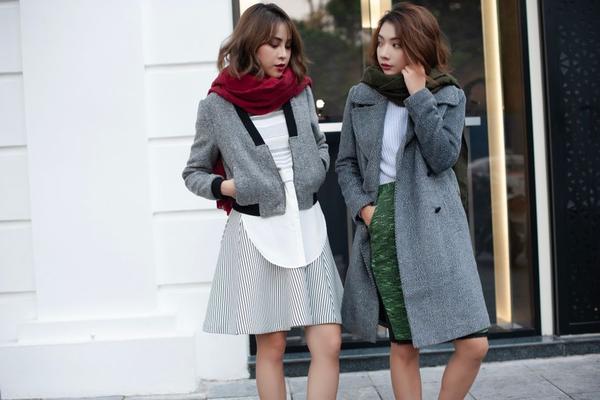
Scarves and gloves should make a winter outfit warmer, not make it feel twice as large. Bulk usually appears when several soft layers compete in the same area: a thick scarf crowds the neckline, glove cuffs bunch under sleeves, and heavy knitwear fills the space between them. The solution is not less warmth. It is controlling where volume sits and letting each accessory work with the coat rather than against it.
Good winter accessory layering is mostly about proportion. If the scarf is thick, keep the gloves sleek. If the coat has a high collar or hood, choose a lower-profile scarf. If the sleeves are narrow, pick gloves that slide underneath cleanly. Those choices can turn a crowded scarf and glove outfit into one that looks deliberate and easy to wear.
Start With the Coat
The coat is the framework for cold-weather accessories. Its neckline, sleeve width, and overall cut tell you how much extra volume the outfit can handle. A tailored wool coat generally looks best with accessories that preserve its clean lines, such as a medium-weight scarf folded flat and fitted leather or fine-knit gloves.
A puffer, parka, or oversized coat can take a larger scarf, but every accessory does not need to be oversized. Keeping the gloves neat prevents the whole upper body from looking padded. With high collars, funnel necks, and hoods, thinner scarves are often easier to tuck without crowding the face.
Use the One-Volume Rule
One of the most useful cold weather styling tips is to choose a single main area of volume. If you love an oversized scarf, balance it with slim gloves. If you prefer chunky ribbed gloves, use a narrower scarf with a flatter weave.
Picture a commute outfit with straight-leg trousers, a jumper, a belted wool coat, and ankle boots. A chunky scarf plus thick cuffed mittens can crowd the top half and hide the coat’s shape. Swap the mittens for sleek gloves and wrap the scarf once instead of several times. You keep the warmth while the waist and coat line remain visible.
Choose Scarf Fabric by Function
Scarf volume is not only about thickness. Fabric structure matters too. Fine wool, cashmere, and smooth knits can insulate without creating a large bundle around the neck. With a structured coat, choose a scarf that folds cleanly and lies flat. Instead of tying a large knot, cross the ends once and tuck them inside the coat.
Casual outerwear gives you more freedom to use texture. Even then, folding a wide scarf lengthwise before wrapping it can make it sit more neatly. If the coat has a large hood, avoid stacking scarf layers high at the back of the neck.
Make Gloves Work With Your Sleeves
Gloves often create hidden bulk at the cuff. A glove cuff, jumper sleeve, and coat sleeve can all meet in the same narrow space, causing bunching and restricting movement. With fitted sleeves, smooth low-profile gloves usually work best because the cuffs slide underneath rather than catching on the coat.
Leather, fine wool, and close-knit gloves are useful for this type of layering. Wider sleeves can accommodate longer gloves, which can become a visible styling detail. Gloves that stop too short may leave the wrist exposed and encourage you to pull down jumper sleeves, creating more fabric where you do not want it.
Keep Colour Coordination Simple
Scarves and gloves do not need to match exactly. A more flexible approach is to repeat a colour family or connect one accessory to another part of the outfit. With a camel coat, dark denim, and brown boots, for example, a burgundy scarf and chocolate-brown gloves feel coordinated without looking like a formal matching set.
If the coat is patterned, simplify the accessories. Choose solid scarf and glove colours that already appear in the print. This keeps textured winter layers looking considered rather than busy.
Avoid Bulk Around the Face
A scarf’s position around the jaw and shoulders can change the whole silhouette. Repeated wrapping can shorten the visible neck and make a coat feel tighter, especially with a hood or high collar. A simple loop with the ends tucked into the coat often provides enough everyday warmth without building a dense ring of fabric.
On colder days, fasten the coat higher first, then add the scarf. Let the coat provide some wind protection instead of expecting the scarf to do everything. This often means you can use a smaller scarf and still stay comfortable.
Build a Reliable Outfit Formula
Start with a base layer and knit that fit comfortably under your coat. Then decide where the outfit can tolerate volume. If the coat is streamlined, add texture through the scarf and keep the gloves fitted. If the coat is already padded or oversized, choose a flatter scarf and simple gloves.
Before leaving, do a quick movement check: raise your arms, turn your head, and fasten the coat fully. If the scarf presses against your chin, the glove cuffs bunch, or the coat feels tight only after the accessories go on, reduce one area of volume rather than removing warmth altogether.
Frequently Asked Questions
Should a scarf match gloves exactly?
No. Matching can look polished, but coordinated colours often feel more natural. Keep the gloves neutral and use the scarf for colour, or repeat a tone from your shoes, coat, or bag.
What scarf style creates the least bulk?
A medium-width scarf in fine wool, cashmere, or a flat knit usually creates less bulk than a very wide, heavily brushed style. Folding it lengthwise and tucking the ends inside the coat also keeps the chest area cleaner.
Should gloves go under or over coat sleeves?
With narrow sleeves, smooth glove cuffs generally work best underneath. Wider sleeves can accommodate longer gloves without bunching.
How can I stay warm without a huge scarf?
Fasten the coat higher, wear an insulating base layer, and choose a smaller scarf in a warm fabric. Warmth does not have to come from scarf size alone.
Keep the Warmth, Lose the Bulk
Layering scarves and gloves well comes down to balance. Let the coat set the limits, concentrate volume in one accessory at a time, and choose fabrics and cuffs that sit smoothly. The best combinations are not necessarily the ones with the most material; they are the ones where every layer has room to work. Think in terms of proportion rather than simply adding more, and winter outfits become warmer, easier to move in, and cleaner visually.